NLP Algorithms for Predictive Lead Scoring
NLP reveals buying intent in emails, chats, and social text to improve lead prioritization and speed sales.

NLP Algorithms for Predictive Lead Scoring
Sales teams waste too much time on low-quality leads. Predictive lead scoring solves this by using AI and machine learning to rank leads based on their likelihood to convert. Natural Language Processing (NLP) takes this further by analyzing unstructured text like emails, chat logs, and call transcripts to uncover buying signals that predictive lead scoring vs. traditional methods miss. This approach improves lead conversion rates by 15–30% and reduces sales cycles by 25%.
Key takeaways:
- AI-driven scoring boosts conversion rates by 38% and shortens sales cycles by 28%.
- NLP techniques like sentiment analysis, keyword extraction, and topic modeling identify high-potential leads faster.
- AI can score a lead in 2–3 seconds, compared to 10–15 minutes manually.
- Combining NLP with machine learning increases prediction accuracy by up to 25%.
With tools like SalesMind AI, businesses can automate lead scoring, integrate LinkedIn data, and improve sales efficiency by 50%. NLP-powered systems are reshaping how companies prioritize and engage with prospects.
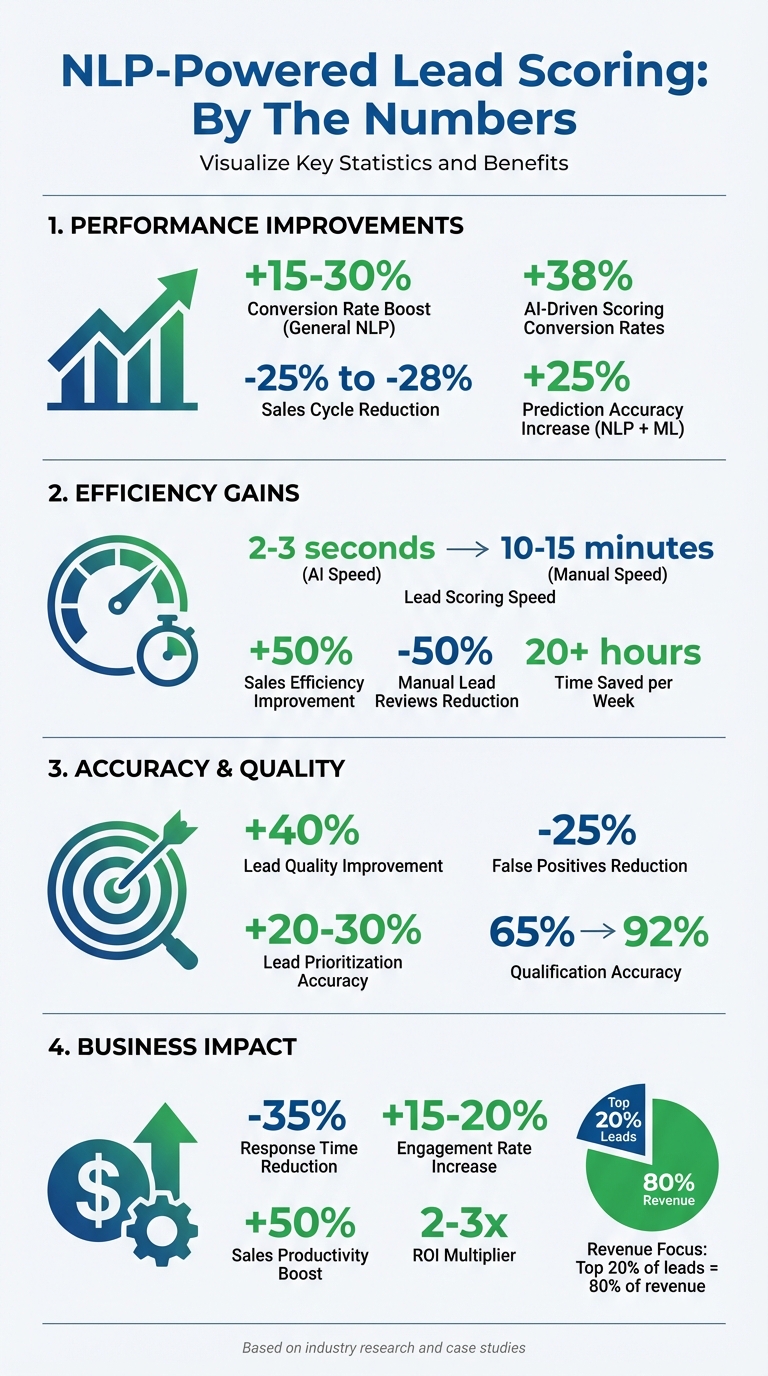
NLP Lead Scoring Impact: Key Statistics and Performance Metrics
Setting Up Predictive Lead Scoring Using Machine Learning
sbb-itb-817c6a5
How Predictive Lead Scoring Works
Predictive lead scoring assigns a numerical value to leads based on their likelihood of converting. The process begins by analyzing historical data from past leads. This data includes details like demographics (e.g., job title, company size), behavioral patterns (such as website visits or email engagement), and interaction history from CRM systems. Machine learning models then sift through this information to identify patterns and correlations tied to successful conversions. For instance, a lead who frequently visits your website and opens emails might score an 85 out of 100, signaling a 20% higher-than-average chance of conversion [1].
Once these patterns are established, the system updates scores in real time as new data comes in. This dynamic approach ensures that lead prioritization reflects the latest behaviors. Armed with this information, sales teams can focus their efforts on the prospects most likely to convert, streamlining their outreach strategies.
The Role of Machine Learning in Predictive Lead Scoring
Machine learning plays a crucial role by analyzing vast amounts of historical lead data to uncover patterns that might go unnoticed by humans. Algorithms like logistic regression, random forests, and gradient boosting (e.g., XGBoost) evaluate numerous variables to determine which combinations are most predictive of conversions, often using predictive lead scoring tools to automate the process. For example, a model might reveal that leads with C-level job titles who repeatedly visit pricing pages are three times more likely to convert than others [3].
These models generate probability scores, typically ranging from 0 to 1, which can be translated into actionable insights. For example, a gradient boosting model might assign a 75% conversion probability to a lead that closely matches the profile of high-value customers. This allows sales teams to zero in on the top-performing 20% of leads, which often account for 80% of revenue [2].
Consider a SaaS company that applied XGBoost to CRM data from 50,000 leads. The result? Prediction accuracy jumped from 60% with rule-based methods to 88%. Leads scoring above 0.7 had a 35% conversion rate, compared to just 5% for lower-scoring ones. This approach also shortened the sales cycle by 40% and boosted revenue per sales rep by 25% [4].
Machine learning models stay relevant by continuously updating with fresh data, adapting to changes in buyer behavior. While these models excel at quantifying behaviors, Natural Language Processing (NLP) adds an extra layer of context by analyzing unstructured text data.
Why NLP Matters in Lead Scoring
Natural Language Processing (NLP) brings a deeper understanding to lead scoring by analyzing unstructured text data - like emails, chat transcripts, support tickets, and LinkedIn messages - that traditional methods might overlook. Unlike basic keyword-based systems, NLP considers the context of language. For example, "exploring options for Q2 budget" signals a more serious intent than "just browsing", even though both phrases mention budgets. This nuanced interpretation can improve prediction accuracy by 15–30% compared to simple keyword matching [5].
NLP also identifies specific cues that influence conversion likelihood. For instance, spotting a phrase like "budget approved" could raise a lead's conversion probability from 12% to 45% [6]. By converting raw text into numerical features using techniques like BERT embeddings, NLP enables machine learning models to grasp the intent behind a prospect's words. When these text-based insights are combined with traditional behavioral data in hybrid models, conversion predictions can be up to 25% more accurate than using numeric data alone [7].
This combination of machine learning and NLP ensures that lead scoring remains both precise and contextually informed, giving sales teams a competitive edge in identifying high-potential prospects.
Key NLP Techniques for Lead Scoring
Modern predictive lead scoring systems rely on three main NLP techniques to transform unstructured text into actionable insights. These methods work hand-in-hand with machine learning models to make lead prioritization more precise and insightful.
Sentiment Analysis for Lead Prioritization
Sentiment analysis evaluates the tone and urgency in a prospect's communication. By analyzing emotional cues in emails, chat messages, or LinkedIn conversations, it can differentiate between a casual inquiry and a pressing need. For instance, a phrase like "urgently need a solution by end of Q2" signals a much higher priority than "just exploring options for the future", even if both mention timelines. This process assigns sentiment scores to leads, enabling sales teams to identify prospects who are ready to act versus those still in the research phase.
By quickly flagging leads with heightened urgency or enthusiasm, sentiment analysis ensures that sales representatives focus their efforts where it matters most. Beyond tone, identifying specific phrases can further clarify where a lead stands in their buying journey.
Keyword Extraction for Identifying Buying Signals
Keyword extraction scans communications for intent-driven phrases that indicate purchase readiness. The process involves cleaning and standardizing text data to ensure consistency across platforms [8]. High-value phrases like "requesting a demo", "pricing information", "looking for a solution", or "budget approved" are defined and tracked [8][10]. NLP systems can detect these critical keywords, often catching signals that manual reviews might miss [8][9].
Each keyword is weighted based on how strongly it correlates with historical conversions. For example, a "demo request" is typically more telling of serious intent than a general pricing inquiry [8][10]. As Alexa Drake from ActiveCampaign explains:
"Generative AI goes further, not just ranking leads but analyzing conversations, suggesting follow-ups, and even crafting personalized emails" [8].
This method has been linked to higher revenue per email [10]. To stay effective, it's essential to focus on a handful of impactful keywords and update your model every 3–6 months to reflect changes in buyer behavior [8].
Once key phrases are identified, grouping leads based on shared themes can provide deeper segmentation.
Topic Modeling for Lead Segmentation
Topic modeling organizes leads by identifying common themes in their interactions with your content. Techniques like Latent Dirichlet Allocation (LDA) analyze whether prospects are engaging with beginner-level materials or diving into detailed technical resources. This not only highlights their interests but also reveals how committed they are to solving their problem [11].
How to Implement NLP in Predictive Lead Scoring
Using natural language processing (NLP) for predictive lead scoring involves three key steps: data collection, model development, and deployment. Together, these steps build a system that improves how leads are qualified over time.
Collecting and Preprocessing Data
Start by gathering unstructured text from various sources like CRM notes, email exchanges, call transcripts, social media interactions, and support tickets. These texts provide valuable insights into lead communication patterns[12][13]. To keep things organized, establish a clear workflow for managing data. This should include file storage, version control, and clear role assignments for team members[1].
Once you've collected the data, it's time to clean and standardize it. Preprocessing involves steps like:
- Tokenization: Breaking text into smaller units, such as words or phrases.
- Lemmatization: Reducing words to their base forms (e.g., changing "running" to "run").
- Text Standardization: Removing stop words, special characters, and normalizing letter case to ensure consistency.
Using templates and checklists can help maintain quality across all datasets before moving on to model training[14][15].
Building and Training the NLP Model
Leverage libraries like spaCy, Hugging Face Transformers, or scikit-learn to develop your model[16][17]. Combine NLP-generated features - such as AI behavioral scoring, keyword detection, and entity recognition - with traditional machine learning inputs. Then, train classifiers like Random Forest or XGBoost using historical lead data that has been labeled as "qualified" or "not qualified"[16][17][18].
To ensure smooth collaboration, assign specific roles for data collection, model building, and performance evaluation. Clear role definitions can streamline the entire process[1].
Deploying and Using the Model in Real-Time
After training, integrate your model into existing CRM platforms. Use tools like Flask for API development or Docker for containerization to enable real-time scoring[19]. Establish workflows that guide leads from initial capture to scoring and assignment within the CRM[1]. Configure the system so that NLP-generated scores and insights are visible, and set up automated actions triggered by certain score thresholds.
To maintain effectiveness, monitor the model's accuracy and track conversion rates through feedback loops and dashboards. Schedule regular performance reviews to evaluate the model's success and retrain it - ideally every quarter - to adapt to changes in sales communication patterns and avoid performance declines[1].
Benefits of NLP-Driven Predictive Lead Scoring
Better Contextual Understanding
NLP goes beyond basic demographic data and keyword matching by analyzing unstructured text, offering a deeper level of insight. Research indicates that this approach can improve lead quality by up to 40% while reducing false positives by 25%.
For example, NLP can pick up on subtle buying signals that traditional methods might miss. If a prospect mentions "budget constraints but interested in demo" in feedback, a rule-based system might overlook the positive intent. NLP, however, identifies this as a promising lead. Similarly, sentiment analysis on LinkedIn comments can uncover growing interest when prospects talk about frustrations with competitors. This leads to lead prioritization that's 20–30% more accurate than conventional methods.
This ability to extract nuanced insights sets the stage for real-time lead qualification.
Real-Time Lead Qualification
Armed with rich contextual data, NLP enables dynamic and immediate lead scoring. It updates scores in real time as new information comes in, analyzing sentiment and intent on the fly. For instance, if a prospect signals urgency on social media, NLP can instantly raise their score. This allows sales teams to respond within minutes instead of days.
The results speak for themselves. Case studies show that real-time NLP can reduce lead response times by 35% and increase engagement rates by 15–20%. One B2B company saw its lead qualification accuracy jump from 65% to 92% by applying NLP to live interaction data, giving their sales reps the ability to connect with prospects at the right moment.
This timely feedback allows sales teams to allocate their resources more effectively.
### Improved Sales Efficiency and Conversion Rates
The real-time insights provided by NLP don't just speed up response times - they also help refine sales strategies. By focusing on leads flagged with strong signals, sales reps can dedicate 50% more time to high-potential prospects, reducing sales cycles and increasing conversion rates by 20–50%. For instance, one SaaS company used NLP to analyze emails and calls, boosting conversions by 28% by zeroing in on high-quality leads.
According to Gartner, NLP transforms lead scoring from a static process into a predictive one, offering 2–3x ROI through greater precision. Best practices suggest integrating NLP with CRM systems to maintain conversion improvements of 15–25%. Additionally, automating lead qualification eliminates the need for manual evaluations, allowing sales teams to focus on building relationships and closing deals.
How SalesMind AI Uses NLP for Lead Scoring
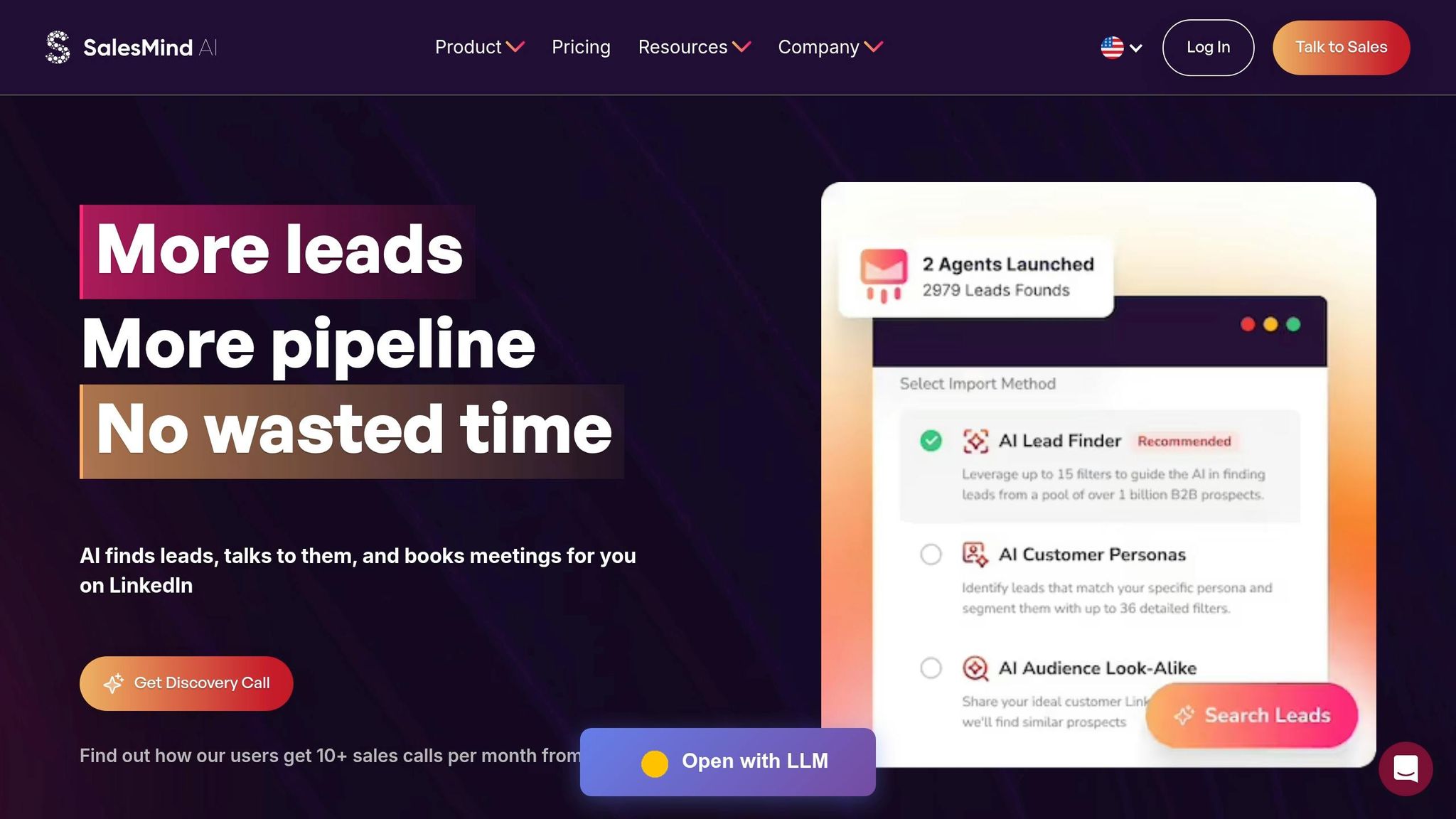
Advanced Lead Scoring Capabilities
SalesMind AI combines behavioral and text data to deliver highly accurate lead scores, improving precision by 30–40% compared to older methods. By using tools like sentiment analysis, keyword extraction, and topic modeling, the platform evaluates prospects in real time. For example, if a prospect frequently interacts with content about "AI automation" and uses positive phrases like "game-changer" in their replies, their score increases, signaling the sales team to prioritize outreach.
This system integrates data from LinkedIn profiles, direct messages, posts, connection interactions, and CRM platforms, all while adhering to U.S. data privacy laws such as CCPA. With this approach, manual lead reviews drop by up to 50%, allowing sales teams to focus on the most promising prospects. The result? A streamlined process that drives efficiency and faster decision-making.
Automating Sales Processes
NLP technology powers AI lead generation tools for automatic lead qualification, personalized communication, and follow-up scheduling. For leads with high scores, the system sends tailored messages based on the sentiment detected. For instance, an enthusiastic prospect might receive a more upbeat and engaging message. This level of automation saves sales teams over 20 hours each week.
Users have reported impressive results: personalized NLP-driven messages boost response rates by 25–35%, while the time from lead identification to scheduling a meeting improves by 40%. Additionally, the system automates 80% of follow-ups, enabling B2B companies to reach over 1,000 prospects monthly without expanding their teams.
LinkedIn Integration
SalesMind AI takes its scoring and automation capabilities further by tapping into LinkedIn data. The platform uses NLP to analyze LinkedIn profiles, posts, and interactions, scoring prospects in real time. It can then automate connection requests and follow-up messages for high-scoring leads. Sentiment and keyword analysis refine scores, helping sales teams focus on profiles that match their ideal customer profiles (ICPs).
Conclusion
NLP algorithms are transforming predictive lead scoring in sales funnels by diving deep into unstructured data from emails, social media, and LinkedIn. Tools like sentiment analysis help pinpoint leads showing genuine interest, while keyword extraction identifies buying signals in real time. Topic modeling further refines this process by grouping prospects based on their specific needs. Research highlights that NLP-enhanced scoring can increase lead-to-opportunity conversion rates by 15–20%[1], and businesses leveraging AI lead scoring often experience up to a 50% boost in sales productivity[5].
Here’s the impact in numbers: NLP-driven lead scoring can shorten sales cycles by 25% and double the identification of qualified leads. By automating complex tasks like data preprocessing, model training, and deployment, this technology makes advanced scoring techniques accessible - even for teams without technical expertise.
SalesMind AI takes this a step further by combining advanced lead scoring with automated LinkedIn outreach and a unified inbox for real-time lead qualification. Users have reported 40% faster follow-ups and better engagement rates, making it a powerful tool for scaling lead generation.
In today’s competitive B2B landscape, adopting NLP-powered tools like SalesMind AI can redefine how businesses approach lead scoring. Why wait? Start a free trial to automate your qualification process and drive higher conversions.
FAQs
What text sources should I use for NLP lead scoring?
When using NLP-based predictive lead scoring, the most important text sources include:
- Demographic and firmographic data: Think job titles, company size, or industry type. These details help paint a clear picture of who the lead is and the organization they represent.
- Behavioral data: This includes actions like website visits, email clicks, or content downloads, offering clues about how engaged a lead is with your brand.
- Social media activity: Interactions on platforms like LinkedIn can reveal professional interests and intent.
The key to getting accurate results? Keeping your data clean, up-to-date, and well-integrated. This ensures the NLP algorithms can score and prioritize leads with precision, making your efforts more effective.
How do I label and evaluate an NLP lead-scoring model?
To effectively label and assess an NLP lead-scoring model, it's crucial to define clear scoring criteria upfront. This could include metrics like conversion rates, sales cycle duration, and return on investment (ROI). These benchmarks help measure the model's success in identifying high-quality leads.
When assigning scores, machine learning algorithms such as logistic regression or neural networks often come into play. These tools analyze patterns and assign scores based on the likelihood of a lead converting into a customer.
To evaluate the model's performance, focus on metrics like precision (how many identified leads were accurate), recall (how many potential leads were captured), and overall conversion rate improvement. Regular validation against actual sales outcomes ensures the model remains reliable.
Finally, keep the model accurate by updating it with real-time data. This continuous refinement helps adapt to changing patterns and ensures the lead-scoring process stays effective over time.
How can I integrate real-time NLP scoring into my CRM?
To bring real-time NLP scoring into your CRM, leverage AI-powered tools that process live data such as website activity, email interactions, and social media engagement. Solutions like SalesMind AI can use both historical and current data to train machine learning models. These models then assign dynamic scores to leads and update CRM workflows automatically. The result? Your sales team can prioritize, route, and follow up with high-potential prospects in real time, making their efforts more effective and focused.